The texts that define palm sugar, gula melaka and coconut sugar do not use the names interchangeably. Malaysia's Food Regulations 1985 tie gula melaka to the coconut palm and give the sugar of the Arenga palm its own name, gula kabong. Indonesia's food and drug authority, BPOM, uses gula palma for sugar from several palms, aren and kelapa among them. A Philippine National Standard covers coconut sap sugar. This guide sets out what those texts say, how Malaysia and Indonesia word a no added sugar claim, and what to ask a supplier.
What Does Malaysian Law Mean by Gula Melaka?
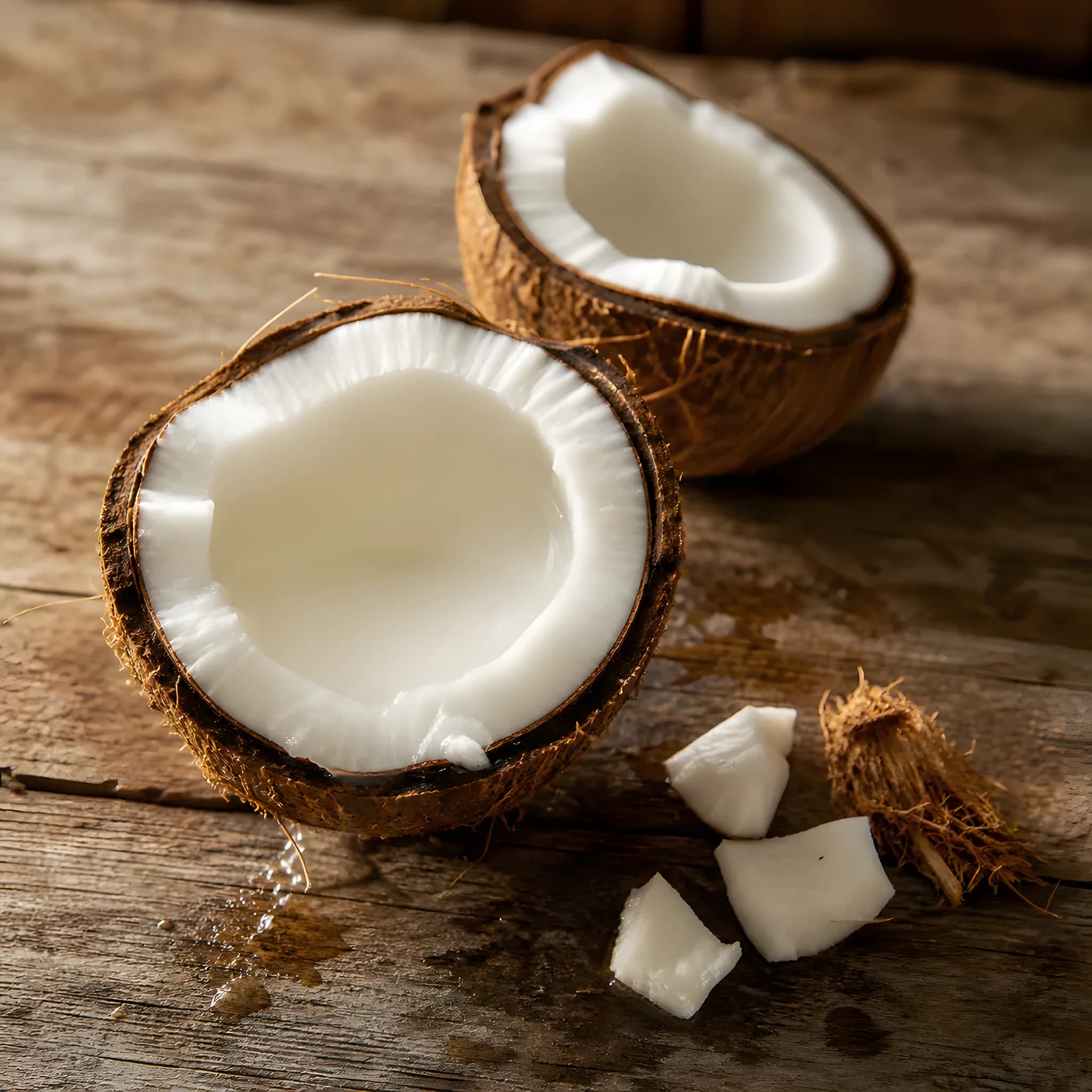
Regulation 126 of Malaysia's Food Regulations 1985 defines gula melaka as "the sugary product made from the sap of the unopened spathe of the inflorescence of the coconut palm Cocos nucifera". It must contain not more than 10 per cent water and not less than 70 per cent sucrose, 1 per cent protein and 1 per cent reducing sugars, and must not yield more than 2.5 per cent ash.
Regulation 127 defines gula kabong as the sugary product made from the sap of the male inflorescence of the palm Arenga pinnata. The Malay text of the Regulations spells the name gula kabung. Its protein minimum is 0.1 per cent and its reducing sugars minimum 3 per cent, with the same water, sucrose and ash limits as gula melaka. Both regulations sit under the heading "Sweetening Substance".
In Malaysian law, then, the two names point to two palms: the coconut palm for gula melaka and Arenga pinnata for gula kabong.
Unless the Regulations provide otherwise, regulation 11(1)(a) of the Food Regulations requires every package containing food for sale to carry on its label the appropriate designation of the food, or a description containing the common name of its principal ingredients, or, where those ingredients have no common name, an appropriate descriptive term that is not misleading. Regulation 2 defines appropriate designation as a specific name or description that indicates the true nature of the food. For a food of two or more ingredients other than water, food additives and added nutrient, the label must also give the appropriate designation of each ingredient in descending order of proportion by weight.
How Does Indonesia Name Palm Sugar?
BPOM Regulation 13 of 2023 on food categories applies to anyone who produces and/or imports processed food for trade in retail packaging. Its categories contain a food's description, definition and/or basic characteristics, and they are applied in setting standards and/or requirements for the safety, quality, nutrition and labelling of processed food, including rules on food additives, claims and/or nutrition information.
Category 11.2 is headed "Gula Merah, Tidak Termasuk Dalam Kategori Pangan 11.1.3", brown sugar, not including food category 11.1.3 (our translation). It defines moulded palm sugar, gula palma cetak, as sugar produced by processing the sap of aren (Arenga pinata Merr, as BPOM spells it), kelapa (Cocos nucifera), siwalan or lontar (Barassus flabellifer L, as BPOM spells it), nipah (Nypa fruticans Wurmb) or other palms, and shaped by its mould (our translation). BPOM gives gula merah aren and gula merah kelapa as examples of the type name. Powdered palm sugar, gula semut or gula palma serbuk, is sugar produced by processing the sap of the same listed palms or other palms, in powder or granule form (our translation). Moulded palm sugar has a water limit of not more than 10 per cent and the powder not more than 3 per cent. Liquid palm sugar, gula palma cair, sits in category 11.4, with gula aren cair and gula kelapa cair as example names.
The same category 11.2 holds two entries whose definitions do not require a palm. Gula merah tebu is brown sugar from sugarcane. Gula coklat sukrosa is sugar produced by processing sucrose sugar with or without added palm sap, palm brown sugar or cane molasses, or a mixture of them, in solid, powder or crystal form, and brown in colour (our translation). The words gula merah appear in a palm example name, in a cane entry and in the name of the soft brown sugar of category 11.1.3, gula merah lembab, so on their own they do not tell you the source.
What Is Coconut Sap Sugar Under the Philippine Standard?
The Philippine National Standard PNS/BAFS 76:2016, from the Department of Agriculture's Bureau of Agriculture and Fisheries Standards, sets minimum requirements for commercial coconut sap sugar obtained from fresh sap from an unopened inflorescence of coconut trees, Cocos nucifera Linn. Section 3.2 of the standard defines coconut sap sugar. The 2016 edition replaced PNS/BAFS 76:2010.
The standard says coconut sap sugar should conform to its chemical table, which gives a moisture content of not more than 3.5 per cent and sucrose of 78.0 to 89.0 per cent. It states "No additives permitted". For labelling, section 9 of the standard refers to the mandatory label information under the Philippine FDA's Administrative Order 2014-0030, including the product name and a complete list of ingredients, in addition to the Codex general labelling standard in its 1985 text, revised in 1991.
Which Palm Is Behind Each Name?
The palm sugar entries in the three texts tell coconut, Arenga and other palms apart, while some Indonesian brown sugar entries do not require a palm at all. The coconut palm, Cocos nucifera, is behind gula melaka in Malaysia, the kelapa entries in Indonesia's category list and coconut sap sugar in the Philippine standard. The Arenga palm is behind gula kabong in Malaysia and gula aren in Indonesia. BPOM's moulded and powdered palm sugar definitions name aren, kelapa, siwalan or lontar, nipah and other palms; its liquid palm sugar definition names aren, kelapa, siwalan and other palms (our translation). Because those definitions allow several palms, ask your supplier to name the palm.
Our article on tropical flavour trends across ASEAN also discusses gula melaka.
What Do No Added Sugar Rules Require?
Malaysia. Regulation 18A of the Food Regulations allows a claim that highlights the non-addition of sugar if no sugar of any type has been added to the food, the food contains no ingredients that contain sugar as an ingredient, it contains no ingredient containing sugar as a substitute for added sugar, and its sugar content has not been increased above the amount contributed by its ingredients by some other means. For the purpose of that regulation, "sugar" includes all monosaccharides and disaccharides added. Where the claim is made, the naturally occurring sugar content must be declared in 100 g or in 100 ml per serving. In regulation 18B, on nutrition labelling, a reference to sugars means all monosaccharides and disaccharides in a food, naturally occurring or added.
Indonesia. BPOM Regulation 1 of 2022 lists the no added sugar claim among its nutrition/non-nutrition claims, and its Lampiran III sets the conditions (our translation). The claim may be placed only on products that normally taste sweet, among others sweets, jams, ready-to-drink beverages and sweet soy sauce. The food must contain no added sugar of any type that still has caloric value, among others sucrose, glucose, honey and high fructose corn syrup. It must contain no ingredients that contain sugar as an ingredient or in their composition, among others jam and candied fruit, and no ingredients that contain sugar as a substitute for added sugar; non-reconstituted fruit juice concentrate and dried fruit paste may not be used, while unconcentrated fruit pulp or puree may. Its sugar content must not rise above what its ingredients contribute. A processed food carrying the claim that naturally contains sugar must also carry the statement "secara alami mengandung gula" (naturally contains sugar, our translation), and the word "gula" may be replaced by the type of sugar.
Both rules are written by type of sugar and type of ingredient. Before a no added sugar claim goes on a product made with palm sugar in either market, check that ingredient against each condition with your regulatory team.
What Should You Ask a Supplier?
Which palm is it from? Ask for the botanical name, such as Cocos nucifera or Arenga pinnata.
Which name and which text is it sold under? For Malaysia, gula melaka under regulation 126 or gula kabong under regulation 127. For Indonesia, the category 11.2 or 11.4 entry, and whether it is a palm sugar or a gula coklat sukrosa. For the Philippines, whether it is declared against PNS/BAFS 76:2016.
Is it palm sugar only? Ask whether sucrose, cane sugar or molasses has been added, and for the full ingredient statement.
Which documents back it? Ask for a specification that states the parameters of the text you sell under, such as water and sucrose, and for Malaysia protein, reducing sugars and ash, with a certificate of analysis for each lot. For the Philippine standard, ask for confirmation that no additives are present.
What goes on your label? Agree the ingredient name with your supplier and your regulatory team before artwork, and check it against any sugar claim you plan to make.
For enquiries, contact our team.
Legal texts were read on 11 October 2026 in the versions listed in the sources. Malaysia's Food Regulations were read in the Ministry of Health consolidation updated to August 2026, incorporating P.U. (A) 48/2026. P.U. (A) 221 of 2026 comes into operation on 16 December 2026 and amends the Fifth A and Sixteenth Schedules. P.U. (A) 298 of 2026 comes into operation on 1 March 2027 and amends paragraph 18B(6)(f) in the national language text; it does not change regulation 18B(4A), discussed here. English translations and summaries of Indonesian texts are our own; quotations in Indonesian reproduce the source wording.
Is Gula Melaka the Same as Coconut Sugar?
Both texts identify the coconut palm, Cocos nucifera: Malaysia's regulation 126 defines gula melaka as the sugary product made from the sap of the unopened spathe of the inflorescence of the coconut palm, and the Philippine standard PNS/BAFS 76:2016 covers commercial coconut sap sugar obtained from fresh sap from an unopened inflorescence of coconut trees. They are separate texts with different limits, for example a sucrose minimum of 70 per cent for gula melaka and a sucrose range of 78.0 to 89.0 per cent for coconut sap sugar, so ask which one your supplier meets.
Is Gula Aren Made From Coconut?
No. BPOM's food category list names aren and kelapa, coconut, as separate palms and identifies aren as Arenga pinata, as BPOM spells it. Malaysia's regulation 127 gives the sugar of the Arenga pinnata palm its own name, gula kabong.
Can a Food Made With Palm Sugar Carry a No Added Sugar Claim?
Check it against the conditions first. Malaysia's regulation 18A allows the claim if, among other conditions, no sugar of any type has been added and the food contains no ingredient that contains sugar, whether as an ingredient or as a substitute for added sugar. Indonesia's BPOM Regulation 1 of 2022 allows it only on products that normally taste sweet, and requires, among other conditions, that no sugar of any type that still has caloric value is added; its ingredient conditions bar ingredients containing sugar as an ingredient or as a substitute for added sugar, while expressly allowing unconcentrated fruit pulp or puree (our translation).
What Water Limits Apply to Palm Sugar?
Malaysia's regulations 126 and 127 set not more than 10 per cent water for gula melaka and gula kabong. BPOM's food categories set not more than 10 per cent for moulded palm sugar and not more than 3 per cent for powdered palm sugar. The Philippine standard gives a moisture content of not more than 3.5 per cent for coconut sap sugar.
Sources
- Malaysia, Food Regulations 1985 (P.U.(A) 437/85), regulations 2, 11, 18A, 18B, 126 and 127 (Ministry of Health English text updated until August 2026, incorporating P.U. (A) 48/2026)
- Malaysia, Peraturan-Peraturan Makanan 1985, regulations 126 and 127 (Ministry of Health Malay text updated to August 2026, P.U. (A) 48/2026)
- Malaysia, Ministry of Health Food Safety and Quality Programme, gazetted amendments to the Food Regulations 1985 (list read 11 October 2026, latest entry P.U. (A) 298 of 2026)
- Indonesia, BPOM Regulation No. 13 of 2023 on Food Categories (Peraturan BPOM Nomor 13 Tahun 2023 tentang Kategori Pangan), Pasal 2 to 4 and Lampiran I categories 11.2 and 11.4 (Berita Negara 2023 No. 428; status "Berlaku" on BPOM's JDIH, 11 October 2026); English renderings are VKA's translation
- Indonesia, BPOM Regulation No. 1 of 2022 on Supervision of Claims on Processed Food Labels and Advertisements (Peraturan BPOM Nomor 1 Tahun 2022), Pasal 2, Pasal 13 and Lampiran III (Berita Negara 2022 No. 2; status "Berlaku" on BPOM's JDIH, 11 October 2026); English renderings are VKA's translation
- Philippines, PNS/BAFS 76:2016, Coconut Sap Sugar, Specifications (Bureau of Agriculture and Fisheries Standards, as listed on the BAFS approved standards page, 11 October 2026)