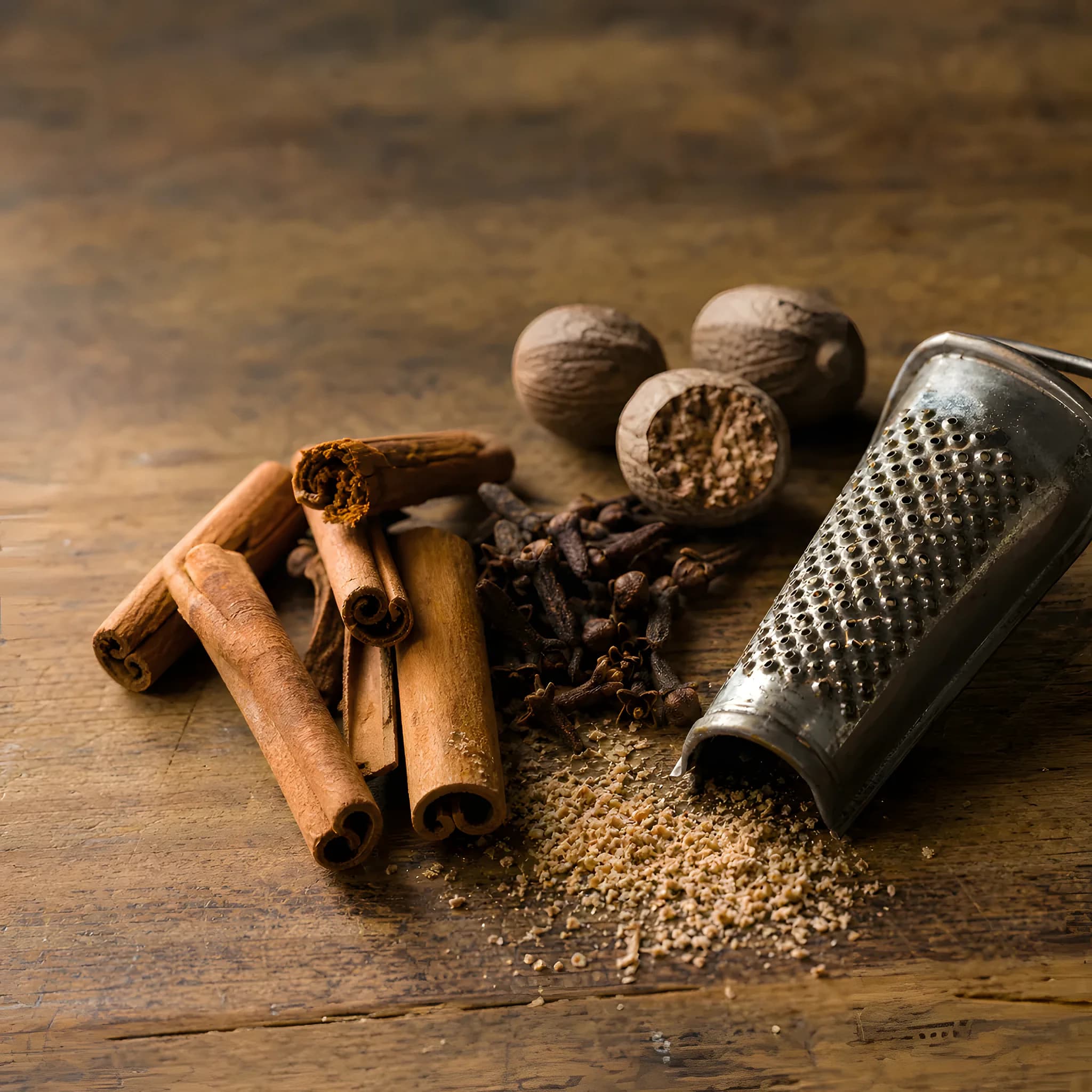
Put the full botanical name and the HS subheading on a clove specification, because the official texts read for this guide do not agree on the Latin name. Malaysia's Food Regulations 1985 define cloves as "the dried flower bud of the plant Eugenia aromatica" (English text updated until August 2026). 21 CFR 184.1257 describes cloves as "the dried unopened flower buds and calyx tubes, harvested before the flowers have opened, of the clove tree Eugenia caryophyllata Thunberg, native to tropical Asia" (eCFR version of 7 October 2026). Indonesia's BPOM Regulation 13 of 2023 names Syzygium obtusifolium or Eugenia caryophyllus (our translation of the definition), and the Singapore National Parks Board (NParks) record that lists clove among its common names is headed Syzygium aromaticum. This guide covers the Latin names, the local names in Malaysia, Indonesia, Thailand, Singapore, China, and Australia and New Zealand, the forms the texts describe, the trade code and the standards on record, how clove can appear on an ingredient list, and what to ask a supplier.
Which Latin Names Do the Texts Print?
Syzygium aromaticum. The NParks Flora & Fauna Web record, last updated 29 August 2024, names the plant Syzygium aromaticum, family Myrtaceae, with the synonyms "Acca caryophyllus, Eugenia aromatica" and native distribution "Moluccas". The record prints no author citation. Crop Group 26, the Spice Group, in 40 CFR 180.41 lists "Clove buds" against "Syzygium aromaticum (L.) Merr. & L.M. Perry." That section's tables "are to be used in conjunction with § 180.40 to establish crop group tolerances" for pesticide residues, so it groups commodities and does not define clove.
Eugenia caryophyllata. The same section uses this name in another table: Crop Group 19, the Herbs and Spices Group, lists "Clove buds ( Eugenia caryophyllata )" in subgroup 19B. 21 CFR 184.1257 names "Eugenia caryophyllata Thunberg", and the Singapore Food Agency (SFA) list of Chinese medicinal materials commonly used in food (as at November 2025) gives Eugenia caryophyllata for clove. Clove has no row in the spice table of 21 CFR 182.10; its section in the US rules read for this guide is 184.1257.
Eugenia aromatica. Regulations 302 and 303 of Malaysia's Food Regulations 1985 use this name for cloves and cloves powder. NParks lists Eugenia aromatica among the synonyms of Syzygium aromaticum.
Syzygium obtusifolium, Eugenia caryophyllus. BPOM Regulation 13 of 2023 on food categories defines cengkeh as the product obtained from the unopened flowers of the cengkeh plant Syzygium obtusifolium or Eugenia caryophyllus, family Myrtaceae, which have been dried (our translation). Its cengkeh bubuk entry spells the second name "Eugenia caryopyllus". The same regulation's list of raw materials from plants or animals has a row for Cengkeh Hutan, forest cengkeh (our translation), with the species name Syzygium cumini, and prints "Syzygium obtusifolium (Roxb.) Kostel." among that row's other names or synonyms (our translation). A search of the full regulation found no "Syzygium aromaticum". We report what each text prints and make no claim about which plants these names refer to in trade.
What Is Clove Called in Each Market?
Malaysia. The Malay text of the Food Regulations 1985 heads regulation 302 "Bunga cengkih" and regulation 303 "Serbuk bunga cengkih", where the English text says "Cloves" and "Cloves powder".
Indonesia. BPOM Regulation 13 of 2023 defines cengkeh as a product obtained from dried unopened flowers and cengkeh bubuk as a powder product obtained from unopened flowers that have been dried and ground (our translation); its Syzygium cumini row bears the common name Cengkeh Hutan.
Thailand. The Thai Industrial Standards Institute (TISI) open-data list of community product standards (dataset metadata modified 19 September 2025) gives standard 737/2548 the Thai title กานพลูแห้ง and the English title "DRIED CLOVES", and files it in its beverages group (our translation). The standard prints no botanical name.
Singapore. The NParks record gives the common names "Clove, Cengkih, Chengkeh, Chingkeh, 丁香". The SFA list, established by the Agri-Food and Veterinary Authority and the Health Sciences Authority "to serve as a guide to the industry", gives item 17 as Flos Caryophylli, English name "Clove", Chinese name 丁香/母丁香, with "flower bud" as the part commonly used in food. The list applies "to the use of whole herbs or whole extracts in food".
China. The national standards information platform supervised by 国家市场监督管理总局 and 国家标准化管理委员会, China's market regulation and standardisation administrations (our translation), lists GB/T 22300-2008 and GB/T 22300-2026 with the Chinese title 丁香 and the English title "Clove".
Australia and New Zealand. Schedule 22 of the Food Standards Code, which describes foods and classes of foods for listed provisions of the Code (compilation No. 5, in force on 30 April 2026), lists "Cloves" in the class "Spices, buds", beside caper buds, cassia buds and nasturtium pods, without a botanical name.
Which Forms Do the Texts Describe?
Buds and powder. Malaysia's regulation 302 covers the dried flower bud, and regulation 303 covers "the powder obtained by grinding the clean, dried flower bud of Eugenia aromatica". Regulation 286 adds that "Spice may be dried or ground or both". BPOM Regulation 13 of 2023 has the same pair, as described above.
The US definition of spice in 21 CFR 101.22(a)(2) includes the phrases "whole, broken, or ground form" and "true to name", among other conditions, and its list of examples includes "Cloves". Singapore's Food Regulations, regulation 213, describe spices "(whether whole, partly ground or in powder form)" among other conditions (current version as at 11 October 2026). Thai community product standard 737/2548 covers products with dried cloves as their main ingredient, in dried pieces or powder, packed in containers for brewing as a drink, and says paper sachets may be used (our translation).
Stems. The only text read for this guide that names clove stems as a traded form is the customs nomenclature below, whose heading covers stems together with whole fruit and cloves.
How Are Cloves Classified for Trade and Standards?
Trade classification. The "World Customs Organization" publication "Harmonized System Nomenclature 2022 Edition" places cloves in heading 09.07, "Cloves (whole fruit, cloves and stems).", with subheading 0907.10 for "Neither crushed nor ground" and 0907.20 for "Crushed or ground". National tariff schedules were not checked.
International standard. ISO publishes ISO 2254:2004, Cloves, whole and ground (powdered), Specification. As read on 11 October 2026, the catalogue entry published by Albania's national standards body gives a publication date of 8 July 2004, records the stage "Standard to be revised" from 20 September 2024, and lists ISO/AWI 2254 as in development. We did not read the standard.
Chinese national standard. The Chinese platform lists two editions of GB/T 22300, 丁香. The 2008 edition, published on 1 August 2008 and implemented from 1 November 2008, is shown as current (our translation). The 2026 edition, published on 30 April 2026, is shown as about to be implemented (our translation), with an implementation date of 1 November 2026. Both statuses are as shown on 11 October 2026. We did not read either text.
How Can Clove Appear on an Ingredient List?
In the United States, 21 CFR 101.22(h)(1) says spice "may be declared as “spice”" in the statement of ingredients. In Australia and New Zealand, Standard 1.2.4 (compilation No. 2, in force on 2 September 2025) says that, subject to Division 3 of Standard 1.2.3, a statement of ingredients must identify each ingredient other than offal by a name by which it is commonly known, a name that describes its true nature, or "a generic name for the ingredient that is specified in Schedule 10, in accordance with any conditions specified in that Schedule". Schedule 10 (compilation in force from 25 February 2021) lists "spices" as a generic name with no condition for use entered.
In Singapore, regulation 5(4)(b) of the Food Regulations requires a food consisting of two or more ingredients to carry a list giving the appropriate designation of each ingredient other than any processing aid, and regulation 5(4)(b)(i) defines that designation as a specific name or description indicating its true nature "except as provided in the First Schedule". The First Schedule says "The following substances may be designated by generic terms in the list of ingredients" and lists "Any spice or mixture of spices or spice extracts not exceeding 2% by weight, either singly or in combination in the food" against "Spice, spices or mixed spices as applicable".
Thai standard 737/2548 requires every container to show at least the product name, with กานพลูแห้ง among the examples, the main ingredients and the net weight, among other details, and says any foreign-language text must have the same meaning as the Thai (our translation). That standard covers products with dried cloves as their main ingredient, in dried pieces or powder, for brewing as a drink (our translation).
Because the US, Australian and New Zealand, and Singapore provisions allow a category name within their stated conditions, a finished-product label might not name clove at all, let alone its Latin name. Ask for the botanical name on the specification and on each lot's certificate of analysis instead.
What Should You Ask a Clove Supplier?
- Botanical name. Ask for the full Latin name, with its author, on the specification and on each lot's certificate of analysis. Clove, bunga cengkih, cengkeh, กานพลู and 丁香 are market names; ask for the botanical name as well.
- The name your market's text prints. If the product is sold against Malaysia's regulations 302 and 303 or the BPOM category 12.2.1 entries, ask how the supplier's Latin name relates to the name that text prints: Eugenia aromatica in Malaysia; in Indonesia, Syzygium obtusifolium or Eugenia caryophyllus in the cengkeh entry and Syzygium obtusifolium or Eugenia caryopyllus, as printed, in the cengkeh bubuk entry (our translation of the BPOM wording).
- Indonesian documents. If a document says cengkeh, ask for the species, since BPOM Regulation 13 of 2023 also uses Cengkeh Hutan for a Syzygium cumini row.
- Form. Ask whether the lot is whole buds, broken or ground, and which definition it is written against.
- Stems. Ask whether the lot is buds only or includes stems. HS heading 09.07 covers whole fruit, cloves and stems together, so the code alone does not say which.
- Trade code. Ask for the HS subheading on the shipping documents, 0907.10 for cloves neither crushed nor ground or 0907.20 for crushed or ground, and check it matches the form ordered.
- Standards cited. If a specification cites ISO 2254 or GB/T 22300, ask for the edition and the clauses relied on: the catalogue records read on 11 October 2026 show ISO 2254:2004 at the stage "Standard to be revised" and give GB/T 22300-2026 an implementation date of 1 November 2026.
What Is Bunga Cengkih?
Bunga cengkih is the Malay heading of regulation 302 of Malaysia's Food Regulations 1985 (Malay text updated until August 2026). The English text heads the same regulation "Cloves" and defines them as "the dried flower bud of the plant Eugenia aromatica". Regulation 303, "Serbuk bunga cengkih" in Malay, covers cloves powder.
Does Indonesia's BPOM Name Syzygium aromaticum for Cengkeh?
Not in BPOM Regulation 13 of 2023. Its cengkeh entry names Syzygium obtusifolium or Eugenia caryophyllus (our translation), and a search of the full regulation found no "Syzygium aromaticum". Ask an Indonesian supplier for the full Latin name with its author.
Which HS Code Covers Cloves?
In the "Harmonized System Nomenclature 2022 Edition", cloves fall under heading 09.07, which covers whole fruit, cloves and stems: subheading 0907.10 if neither crushed nor ground, and 0907.20 if crushed or ground. This is the nomenclature published by the "World Customs Organization"; national tariff schedules were not checked.
Can an Ingredient List Say Spice Instead of Clove?
Within each text's conditions, yes. 21 CFR 101.22(h)(1) says spice "may be declared as “spice”". Australia and New Zealand's Schedule 10 lists "spices" as a generic name with no condition entered. Singapore's First Schedule allows "Spice, spices or mixed spices as applicable" for spices "not exceeding 2% by weight, either singly or in combination in the food".
Sources
- United States, 21 CFR 184.1257, clove (eCFR, version of 7 October 2026)
- United States, 21 CFR 101.22, paragraphs (a)(2) and (h)(1), spices on food labels (eCFR, version of 7 October 2026)
- United States, 21 CFR 182.10, "Spices and other natural seasonings and flavorings" (eCFR, version of 7 October 2026)
- United States, Environmental Protection Agency, 40 CFR 180.41, crop group tables, Crop Groups 19 and 26 (eCFR, version of 7 October 2026)
- Malaysia, Ministry of Health, Food Regulations 1985, regulations 286, 302 and 303 (English text updated until August 2026)
- Malaysia, Kementerian Kesihatan, Peraturan-Peraturan Makanan 1985, peraturan 302 and 303 (Malay text updated until August 2026)
- Indonesia, BPOM Regulation No. 13 of 2023 on Food Categories (our translation; source in Indonesian)
- Thailand, Thai Industrial Standards Institute, open-data list of Thai community product standards (dataset metadata modified 19 September 2025)
- Thailand, Thai Industrial Standards Institute, Thai community product standard 737/2548, กานพลูแห้ง, dried cloves (our translation; source in Thai)
- Singapore, National Parks Board, Flora & Fauna Web, Syzygium aromaticum (record last updated 29 August 2024)
- Singapore Food Agency, List of Chinese Medicinal Materials Commonly Used in Food (as at November 2025)
- Singapore, Food Regulations, regulation 213, spices and condiments (current version as at 11 October 2026)
- Singapore, Food Regulations, regulation 5, general requirements for labelling (current version as at 11 October 2026)
- Singapore, Food Regulations, First Schedule, permitted use of generic terms in the declaration of ingredients (current version as at 11 October 2026)
- Australia New Zealand Food Standards Code, Schedule 22, Foods and classes of foods (compilation No. 5, in force on 30 April 2026)
- Australia New Zealand Food Standards Code, Standard 1.2.4, Information requirements, statement of ingredients (compilation No. 2, in force on 2 September 2025)
- Australia New Zealand Food Standards Code, Schedule 10, Generic names of ingredients and conditions for their use (compilation in force from 25 February 2021)
- "World Customs Organization", "Harmonized System Nomenclature 2022 Edition", Chapter 9
- ISO 2254:2004, cloves, whole and ground (powdered), specification, catalogue entry published by Albania's national standards body
- China, national standards platform, GB/T 22300-2026, 丁香, Clove (status as shown on 11 October 2026)
- China, national standards platform, GB/T 22300-2008, 丁香, Clove (status as shown on 11 October 2026)