Malaysia levies excise of RM0.90 per litre on ready-to-drink juices and other non-alcoholic beverages (tariff headings 20.09 and 22.02), but exempts a drink whose total sugars are at or below 12 g per 100 ml for fruit and vegetable juices, 7 g per 100 ml for milk-based drinks and 5 g per 100 ml for other beverages. A reformulation is judged on where the finished drink's total sugars land against its threshold, as stated on the label and backed by an accredited laboratory report. See P.U. (A) 389/2025, First Schedule and P.U. (A) 156/2019, items 38 and 39.
What Malaysia's beverage sugar excise covers
As of October 2026, the current rate instrument is the Excise Duties Order 2025 P.U. (A) 389/2025, in force from 1 November 2025 under para 1(2). Its First Schedule lists RM0.90 per litre for the relevant subheadings of 20.09 and 22.02. It revoked the 2022 order under para 6 and carried the RM0.90 rate over. The rate rose from RM0.50 to RM0.90 on 1 January 2025 under P.U. (A) 386/2024, para 1(2) and Pindaan Jadual.
The exemption thresholds sit in the Excise Duties (Exemption) Order 2017 [P.U. (A) 444/2017], Schedule Part I: item 38(a) covers ready-to-drink fruit and vegetable juices under heading 20.09 at 12 g per 100 ml or less; item 39(a) covers other heading 22.02 beverages at 5 g per 100 ml or less, except the milk-based drinks in item 39(b). Item 39(b) covers heading 22.02 beverages based on milk of Chapter 4 at 7 g per 100 ml or less. These items were inserted by P.U. (A) 156/2019, para 2.
In force since: duty on sweetened beverages since 1 July 2019 (Excise Duties (Amendment) Order 2019 [P.U. (A) 154/2019] para 1(2)); thresholds from the same date (P.U. (A) 156/2019 para 1(2)). The levy began at RM0.40 per litre under P.U. (A) 154/2019. Find the levy instrument in the Attorney General's Chambers P.U. (A) register, and the threshold commencement in P.U. (A) 156/2019.
Exemption conditions include: total sugars stated on the label under the Food Regulations 1985 and in a lab analysis report from a laboratory listed by the Department of Standards Malaysia, produced at importation or on release from a licensed premise; the goods imported or bought from a licensed manufacturer; and a signed exemption certificate (P.U. (A) 444/2017 para 2(2)). See P.U. (A) 156/2019, items 38 and 39 conditions and P.U. (A) 444/2017 in the official register.
What counts as total sugars in the finished drink?
Total sugars means all monosaccharides and disaccharides, naturally occurring or added. That definition appears in item 38(c)(i) and item 39(b)(i) of the exemption conditions, reproduced in P.U. (A) 156/2019. The label and laboratory report requirements are in item 38(c)(ii) and item 39(b)(ii). For a reformulation brief, record the finished drink's total sugars and the applicable beverage category alongside the intended taste profile.
What can flavour do in a reduced-sugar drink?
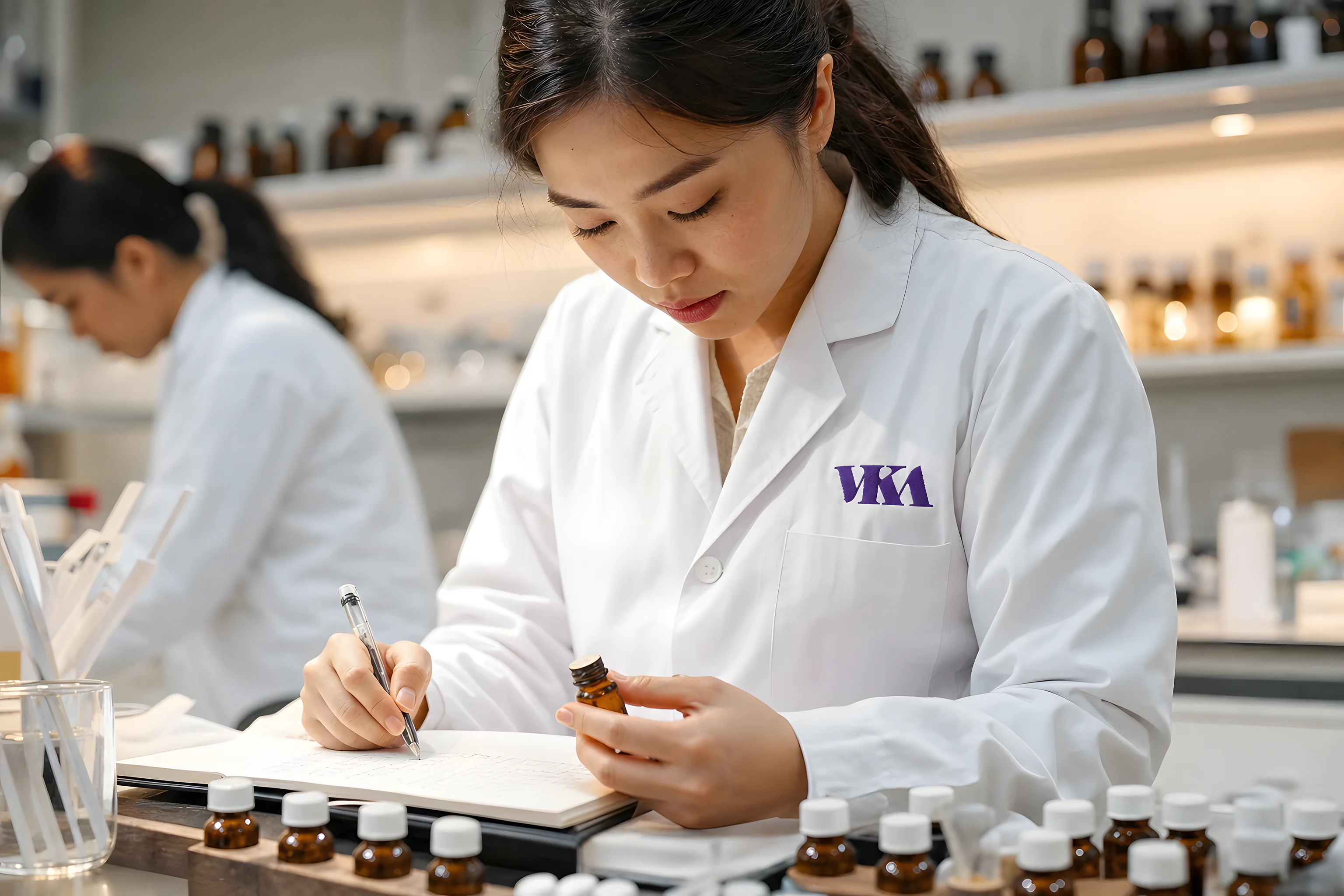
VKA describes its approach in the ASEAN sugar reduction article: "Our approach combines sweetness enhancement, off-note masking, and mouthfeel restoration". Its Sugar Reduction Technologies page states: "A beverage and a baked good interact with sweetness differently. We develop sugar reduction solutions tailored to your exact product type, processing method, and target market." These are the capabilities to discuss when preparing a Malaysian beverage sample brief.
What to put in a reduced-sugar beverage brief
State the beverage category, current and target total sugars, and the sweetness and mouthfeel you want to evaluate. Include the beverage recipe and processing method when requesting a sample, in line with VKA's application-specific flavour creation approach. Read the beverage solutions page for the application discussion, and use the Malaysia flavour supplier page to request a sample. Keep the label, laboratory report and exemption certificate requirements alongside the sample evaluation brief.
Frequently asked questions
What is Malaysia's beverage sugar excise rate?
As of October 2026, the rate is RM0.90 per litre for the relevant tariff subheadings of 20.09 and 22.02 under P.U. (A) 389/2025. That order took effect on 1 November 2025 and carried over the rate introduced on 1 January 2025 by P.U. (A) 386/2024.
What are the total sugars thresholds for exemption?
Items 38(a), 39(a) and 39(b), inserted by P.U. (A) 156/2019, set thresholds of 12 g per 100 ml or less for ready-to-drink fruit and vegetable juices, 5 g per 100 ml or less for other heading 22.02 beverages, and 7 g per 100 ml or less for heading 22.02 milk-based beverages based on milk of Chapter 4. The exemption conditions also apply, including label and laboratory evidence, imported goods or purchase from a licensed manufacturer, and a signed exemption certificate under P.U. (A) 444/2017 para 2(2).
Does naturally occurring sugar count?
Yes. Total sugars means all monosaccharides and disaccharides, naturally occurring or added, under item 38(c)(i) and item 39(b)(i) of the conditions reproduced in P.U. (A) 156/2019.
What does VKA offer for reduced-sugar beverage development?
VKA's published approach combines sweetness enhancement, off-note masking and mouthfeel restoration. Its Sugar Reduction Technologies page describes solutions tailored to the product type, processing method and target market.
Sources
- Excise Duties Order 2025, P.U. (A) 389/2025, paras 1(2), 2 and 6; First Schedule, Chapters 20 and 22
- Excise Duties (Amendment) (No. 2) Order 2024, P.U. (A) 386/2024, para 1(2) and Pindaan Jadual
- Excise Duties (Exemption) (Amendment) (No. 2) Order 2019, P.U. (A) 156/2019, paras 1(2) and 2; items 38 and 39
- Attorney General's Chambers official register: P.U. (A) 154/2019 levy commencement and P.U. (A) 444/2017 para 2(2)