
Measured by People,
Not by Opinion
Taste is the only property of a flavour that instruments cannot fully report. We measure it the way it has to be measured: trained assessors, isolated booths, coded samples, and a method that gives you the same answer twice.
One Person's Verdict
Is Not Data
Most flavour decisions still get made in a meeting room, from an unlabelled cup, by whoever is most senior. That is not an assessment, it is a preference, and it does not survive contact with a consumer.
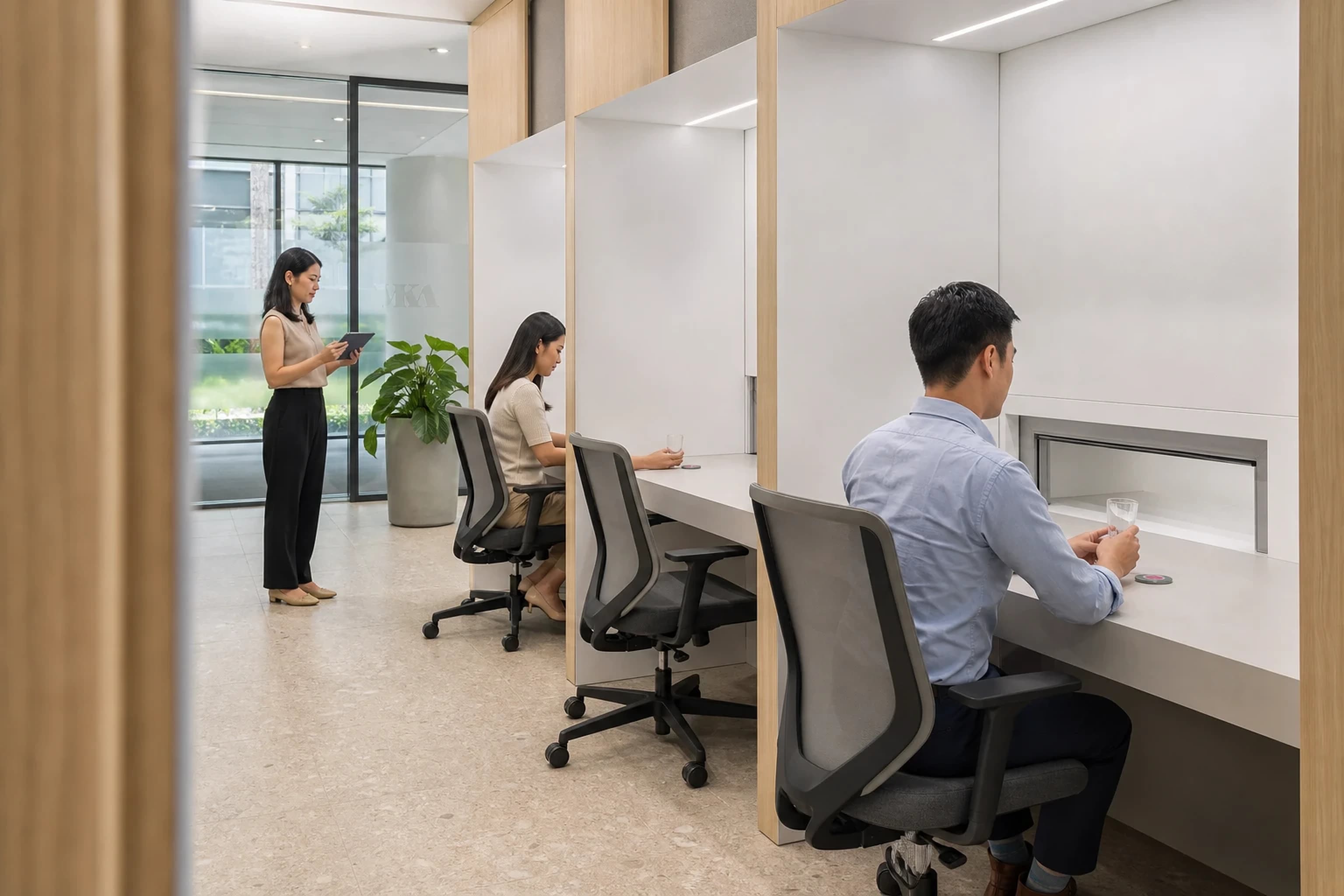
Sensory work removes the things that quietly bias a result: the shape of the room, the colour of the sample, knowing which one is the incumbent, and hearing what the person next to you thinks. Individual booths under neutral light with pass-through hatches exist for exactly that reason.
Our panellists are screened and trained against reference standards, and calibrated so their scoring stays comparable over time. That is what makes a result repeatable rather than merely confident.
Individual booths, neutral light, pass-through hatches, no cross-talk
Screened and calibrated assessors, not an ad-hoc tasting group
Blind coded samples, randomised order, no incumbent advantage
A Method You Can
Repeat and Defend
Four ways we put a number on something people assume cannot be measured.
Controlled Booth Conditions
Assessment happens in individual booths under even, neutral, glare-free light, with samples passed through a hatch so nobody sees who prepared what. Panellists cannot see or influence each other. It removes the environmental and social bias that a table tasting cannot.
Trained Descriptive Analysis
A screened, trained panel scores defined attributes against reference standards, producing a profile you can compare, chart and revisit. This is what turns 'it tastes a bit thin' into an intensity score on a named attribute that a flavourist can act on.
Consumer and Preference Testing
Trained panels tell you what a product IS; consumers tell you whether they like it. We run both, and keep them separate, because a descriptive panel that has been asked to state a preference has been contaminated as a measuring instrument.
Sensory Tracking Over Shelf Life
A profile that is right on day one can drift by month six. We re-panel stored samples across their shelf life in the intended pack, so the change is caught as a measured shift rather than as a customer complaint.

Where a Panel Settles It
Sensory work earns its keep at the points where a decision is expensive to get wrong.
Bring Us Something
to Settle
If a taste decision is stuck, or a reformulation has to prove it changed nothing, a panel will resolve it faster than another round of opinions. Tell us what you need to know.