What Fat Reduction Is, and Why It Matters
Fat reduction is the practice of lowering the fat content of a food while keeping it palatable, recognisable, and acceptable to the people who already buy it. It is one of the most common reformulation briefs in product development, usually driven by three things at once. The first is calories, since fat is the most energy-dense nutrient at roughly nine calories per gram against four for protein and carbohydrate, so cutting fat is a direct way to lower the calorie count of a portion. The second is a labelling claim, because many markets allow a product to be described as reduced-fat, low-fat, or light only when it meets a defined threshold, and those claims sell. As a common example, though thresholds differ by market, in the US "low fat" commonly means no more than 3 grams of fat per serving and "reduced fat" at least 25 per cent less than the reference product. The third is cost, as fats and oils are a meaningful share of the recipe cost in many categories, so a lower-fat formulation can also be a cheaper one.
Fat Type Versus Total Fat
The health framing has moved on. For years the message was simply that less fat is better, but modern nutrition science treats the type of fat as mattering more than the total amount. Unsaturated fats are generally regarded as beneficial, trans fats as harmful, and saturated fat as more nuanced than the old blanket advice suggested. Saturated fat is also where labelling pressure is sharpening, and the date is specific. Singapore's Nutri-Grade scheme has graded prepacked beverages on saturated fat as well as sugar since 30 December 2022 and freshly prepared beverages since 30 December 2023, and from mid-2027 the Ministry of Health extends the scheme to 23 sub-categories of prepacked salt, sauces, seasonings, instant noodles and cooking oils, which is where saturated fat in a cooking oil enters the front-of-pack system for the first time. HPB has also published that the mark will be redesigned to “call out the nutrient of concern that results in the product’s final grade”, so an oil that grades on saturated fat will name it on the pack rather than carrying an unexplained letter. The enabling regulations have not been made: nothing was gazetted under the Sale of Food Act in 2026, so this is an announcement of 6 April 2025 with a mid-2027 target, and it is the same front-of-pack system that drives salt reduction. A low-fat product is not automatically a healthier one, particularly if the fat that comes out is replaced by refined sugar or starch to rebuild the eating experience, which can leave the calorie count barely changed and the nutritional profile no better. The practical takeaway is that total-fat reduction is one valid strategy among several, useful for calorie targets, reduced-fat claims, and cost, rather than a universal good. Setting the goal clearly, whether it is calories, a specific claim threshold, or a shift in fat quality, matters more than simply removing as much fat as possible.
Why Fat Is Hard to Remove
Fat is genuinely hard to remove because the calories are the least of what it does. For your product's flavour, the most important job fat does is aroma. Many of the compounds that give food its character are fat-soluble, so they dissolve into the fat phase and are held there, and fat slows their release across the time a mouthful is eaten. That slow, sustained release is what gives a full-fat product its rounded, lingering profile, so when the fat comes out the same flavour can read as thin, sharp, or front-loaded, arriving all at once and then disappearing. Fat also delivers mouthfeel directly: it provides the creaminess, richness, lubricity, and smooth coating that the tongue registers as quality, and a reduced-fat version often feels watery, dry, or thin by comparison even when the flavour is correct. On top of that, fat does structural work. It shortens the gluten in pastry and biscuits to give a tender crumb, it forms and stabilises the emulsions at the heart of dressings, mayonnaise, and many sauces, and it carries the texture and bite of processed meats. Fat also contributes to satiety, the sense of fullness a food gives, though that effect is real but modest and less direct than fat's energy density alone would suggest, since fat is easy to over-eat, which is part of why reducing it makes sense in the first place. The practical point is the eating moment rather than the calorie count: a lower-fat product can still feel less satisfying as it is being eaten, and that is something your reformulation has to manage. Any serious fat-reduction plan treats it as a change to aroma, texture, structure, and satisfaction at the same time, not as a single number on a nutrition panel.
The Techniques: Fat Replacers
The techniques fall into a few families, and they are almost always combined rather than used alone. The largest family is fat replacers, ingredients that take over part of the physical job fat was doing. Carbohydrate-based replacers such as maltodextrin, inulin, and modified starches hold water and form gels that mimic the body and smoothness of fat, and they suit water-containing products like dressings, dairy, and sauces. Protein-based replacers use microparticulated protein, protein processed into particles small enough that the tongue reads them as the fine, creamy texture of a fat emulsion, such as microparticulated whey protein, the Simplesse class, which works well in dairy and frozen products but is generally unsuitable for high-heat dry applications such as baking and frying, where heat can alter the protein's structure and functionality. Lipid-based and structured systems use a smaller amount of fat or oil engineered to do more, for example oil structured into a semi-solid network, so that less total fat delivers a similar texture. No single replacer reproduces everything fat does, which is why a real formulation usually layers more than one.
Rebuilding Aroma and Creaminess
Replacing the physical role of fat is only half the work, because the aroma that the fat used to carry and release has to be rebuilt too. This is flavour modulation in the service of fat reduction. When the fat phase shrinks, the fat-soluble aroma compounds have less to dissolve into and are released faster, so the flavourist re-engineers the profile to restore the slow, rounded release the consumer expects, adjusting which notes are used and how they are delivered so the reduced-fat product still tastes complete rather than sharp and fleeting. Alongside this sits a set of mouthfeel and creaminess builders aimed at the perception of richness rather than the aroma. Kokumi is the most useful of these for fat work: it is a sensation of richness, body, and mouthfulness contributed by certain peptides, not a basic taste in its own right, and it makes a leaner product taste fuller and more satisfying. It is worth being precise here, because kokumi is about perceived richness and thickness, which is distinct from umami, the savoury taste that sits behind salt-reduction work; the two are often discussed together but they solve different problems. Other creaminess and dairy-note systems work in the same direction, rebuilding the impression of a fattier product without the fat.
Emulsion and Process Engineering
The final family is emulsion and process engineering, which works on the physics of the product rather than on its flavour. Many fatty foods are oil-in-water or water-in-oil emulsions, and the size and stability of the fat droplets shape how rich and smooth the product feels. By controlling droplet size, building a stable emulsion with the right emulsifiers and stabilisers, and tuning the process, you can make a smaller amount of fat behave like more, since finer, well-distributed droplets read as creamier than the same fat poorly dispersed. Process choices such as homogenisation pressure, mixing, and temperature all feed into this. Because each of these families has a limit, replacers cannot reproduce every property of fat, modulation cannot conjure aroma that was never there, and emulsion engineering only helps where the product is an emulsion, the effective answer usually combines several together and tunes the mix to the specific product.
Where Fat Reduction Is Used
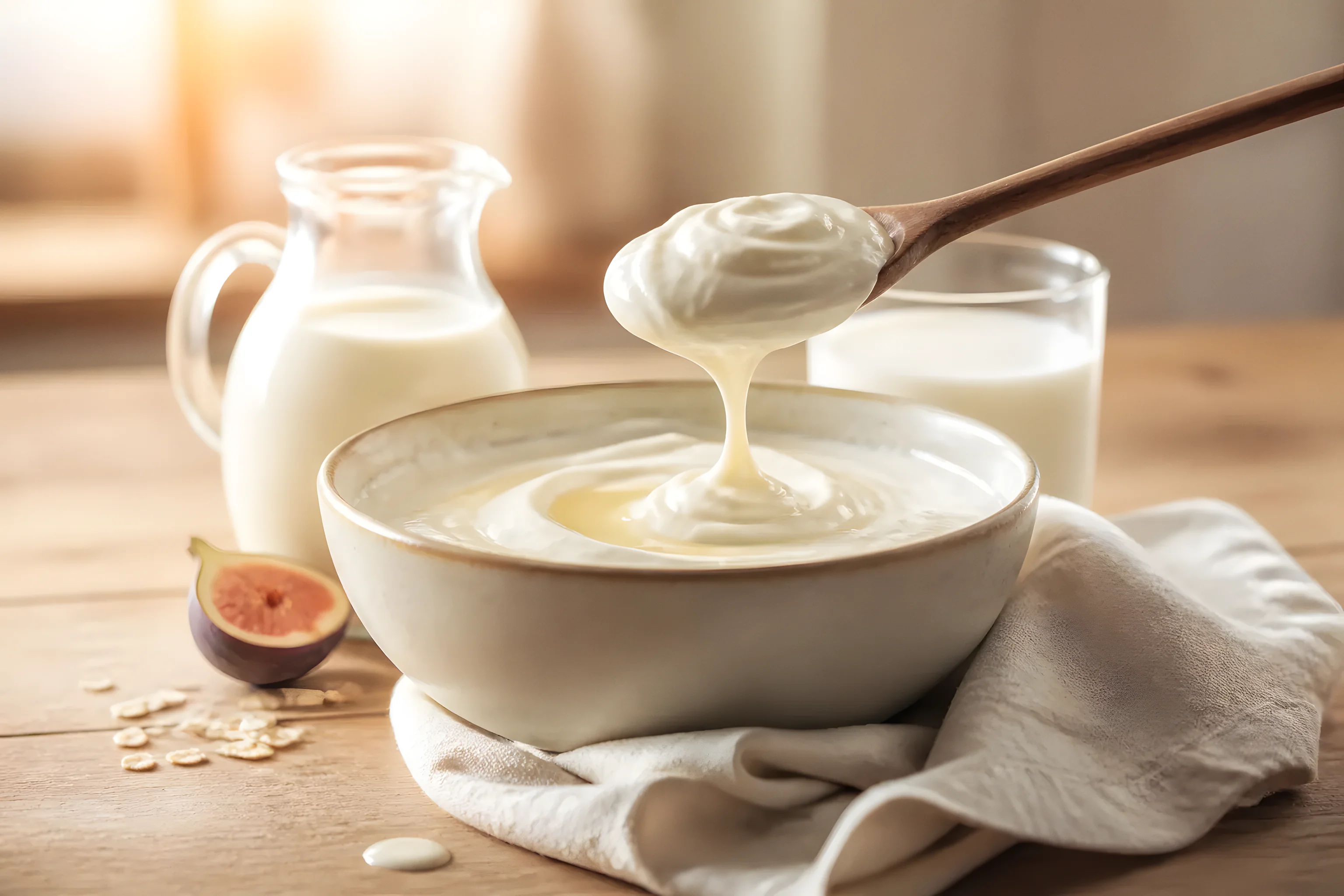
The categories where fat reduction matters most are the ones built on richness, and each behaves differently. Dairy is the central case: in cheese, fat carries flavour and gives the body and melt, in yoghurt it provides creaminess and a smooth set, and in ice cream it controls texture, the coating in the mouth, and how the product melts, so reduction here leans heavily on protein-based replacers, emulsion control, and creaminess builders. Bakery depends on fat for tenderness and structure, since fat shortens the crumb in biscuits, cakes, and pastry, so removing it changes the bite and not only the flavour. Dressings, mayonnaise, and sauces are emulsions where fat provides body, cling, and mouthfeel, which makes emulsion engineering and carbohydrate-based replacers the natural tools. Processed meats use fat for juiciness, binding, and texture as well as flavour, so reduction is a careful balance against structure and the eating experience. Fried and savoury snacks carry both the fat absorbed in frying and the richness it brings, where the challenge is to keep the indulgent character while lowering the fat. The right technique depends entirely on which of fat's jobs is most important in that specific product.
How VKA Approaches Fat Reduction
A flavour house helps by treating fat reduction as a complete reformulation rather than the removal of one ingredient, and by bringing tools the recipe alone does not have. That means rebuilding the aroma release that leaves with the fat through flavour modulation, restoring the impression of richness with kokumi and creaminess systems, supporting the texture through emulsion design where the format allows, and tasting the result in the real product through the real process rather than against a neutral base. It also means being clear about the limits: a flavourist can recover much of the flavour and a good deal of the perceived richness, but structure and some of the physical functions of fat are formulation questions that have to be solved alongside, and the realistic target is often a meaningful reduction that still eats well, not the largest cut possible on paper. At VKA our fat reduction technologies are developed in-house to rebuild the mouthfeel, creaminess, and flavour carry that fat provides, using naturally-derived systems that work with your existing recipe. This work connects to our Textures Portfolio for the mouthfeel side and the wider set of food and beverage solutions we develop for. If you have a fat target to hit, talk to a flavourist directly and bring a sample of the current product so the profile and the texture can be rebuilt in the real thing.
Sources
- American Heart Association presidential advisory - dietary fats and cardiovascular disease
- WHO - updated guidelines on fats and carbohydrates (2023)
- Microparticulated protein fat replacers - review, PMC
- Singapore Ministry of Health, Nutri-Grade requirements for key sources of sodium and saturated fat intake to take effect from mid-2027 (6 April 2025)
- Health Promotion Board, Specifications on Nutri-Grade extension to key contributors of sodium and saturated fat