
The Definition of Natural Flavourings Under BPOM Regulation
Perisa Alami, natural flavouring, is one of three flavouring categories in Peraturan BPOM Nomor 13 Tahun 2020 on flavouring food additives. Pasal 4 groups them by source and manufacturing process: "dikelompokkan berdasarkan sumber dan proses pembuatan Perisa yang meliputi: a. Perisa Alami; b. Perisa Identik Alami; dan c. Perisa Artifisial", that is, natural, nature-identical and artificial. On the label, however, there are only two groups. Pasal 14 as amended by Peraturan BPOM Nomor 11 Tahun 2021 provides "Pelabelan BTP Perisa dikelompokkan menjadi: a. Perisa Alami; dan b. Perisa sintetik", and the ayat (3a) inserted in 2021 says what the second one contains: "Perisa sintetik sebagaimana dimaksud pada ayat (2) huruf b terdiri atas perisa identik alami dan perisa artifisial", synthetic flavouring consists of nature-identical and artificial flavourings.
Pasal 1 angka 4 of PerBPOM 13/2020 defines a flavouring as a "bahan tambahan pangan berupa preparat konsentrat, dengan atau tanpa ajudan perisa (flavouring adjunct) yang digunakan untuk memberi flavour, dengan pengecualian rasa asin, manis dan asam", a food additive in concentrated-preparation form, with or without a flavouring adjunct, used to impart flavour, excluding salty, sweet and sour tastes. Pasal 3 names five kinds of flavouring material: "a. Senyawa Perisa; b. Bahan Baku Aromatik Alami; c. Preparat Perisa; d. Perisa Asap; dan/atau e. Perisa Hasil Proses Panas". The consequence for your formulation is simple. The regulatory category governs what the flavouring may contain; the label group governs what may be printed. They are not the same list. The primary references for this section are PerBPOM 13/2020 and PerBPOM 11/2021 at JDIH BPOM (jdih.pom.go.id). See also our introduction to food flavourings.
Raw Material Sources of Natural Flavourings
The raw materials of natural flavourings are grouped by their source and the method by which they are obtained:
- Botanical extracts. Vanilla from vanilla beans, coffee extract, tea extract, pandan extract, ginger extract. Obtained through food-grade solvent extraction (ethanol, propylene glycol, water, or vegetable oil).
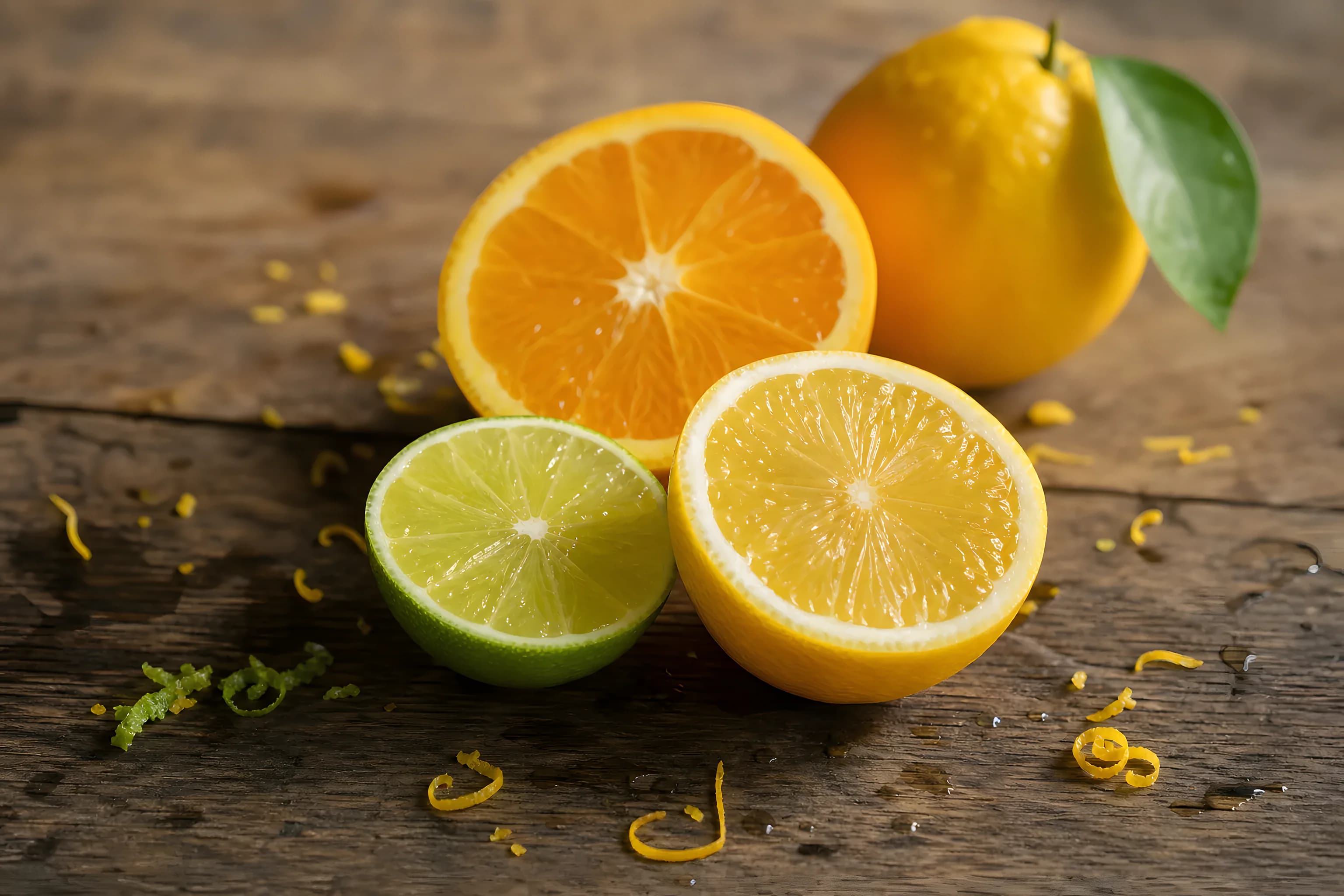
- Essential oils. Citrus oil from citrus peel, peppermint oil from mint leaves, clove oil from clove buds, cinnamon oil from the bark. Obtained through steam distillation, cold press, or supercritical CO2 extraction.
- Oleoresins. Concentrated extracts from spices such as pepper, paprika, and turmeric. They contain both volatile and non-volatile compounds that give colour and taste.
- Fermentation products. Biological vanillin from microbial fermentation, certain cheese profiles, natural organic acids. They meet the natural criteria as long as the microorganisms used are approved for food.
- Enzymatic products. Protein hydrolysates, aroma compounds produced through the controlled action of food enzymes. They fall within the natural category under the Codex.
The carrier solvent used in a natural flavouring must also be food grade and declared on the certificate of analysis. Common carriers are propylene glycol, vegetable glycerin, ethanol, medium-chain triglycerides and water. PerBPOM 13/2020 Pasal 10 requires the residue of an extraction solvent used as a processing aid to be stated in the flavouring specification, for retail and industrial use alike, so that figure should be available from the supplier.
Labelling in Indonesia: Three Categories, Two Label Groups
The most common labelling error is printing the name of the regulatory category instead of the name of the label group. PerBPOM 31/2018 on processed food labelling, Pasal 19 ayat (3) huruf d, requires the ingredient list to carry the "nama kelompok perisa untuk BTP perisa meliputi perisa alami dan/atau perisa sintetik", the flavouring group name, natural or synthetic. Only two wordings are available:
- "Perisa alami [name]" where the flavouring meets the composition rules for Perisa Alami in PerBPOM 13/2020 Pasal 4, meaning it contains neither nature-identical nor artificial flavouring compounds. Written out: "perisa alami stroberi".
- "Perisa sintetik [name]" for both nature-identical and artificial flavourings. Both fall in the same label group under PerBPOM 13/2020 Pasal 14 ayat (3a), inserted by PerBPOM 11/2021.
- The terms "perisa identik alami" and "perisa artifisial" are regulatory categories, not label groups, and are not printed as the group name in an ingredient list. On the flavouring's own label, PerBPOM 13/2020 Pasal 14 ayat (4) requires both the flavouring group and the flavouring adjunct to be stated.
PerBPOM 31/2018 Pasal 63 ayat (7) closes off one further claim: an "asli" or authenticity statement "tidak dapat digunakan untuk Pangan Olahan yang dicampur dengan bahan yang dapat mengaburkan keasliannya, seperti penggunaan perisa", it may not be used for a processed food blended with anything that obscures its authenticity, and the regulation names the use of flavouring as its example. PerBPOM 13/2020 Pasal 17 also bars flavourings outright from infant formula, and Pasal 18 bars their use to hide non-conforming material, practices contrary to good manufacturing practice, or food spoilage.
The Halal Status of Natural Flavourings
"Natural" does not automatically mean halal. Undang-Undang Nomor 33 Tahun 2014 Pasal 4 states "Produk yang masuk, beredar, dan diperdagangkan di wilayah Indonesia wajib bersertifikat halal", products entering, circulating and traded in Indonesia must be halal certified. Food additives for food and beverages sit in the first phase of that obligation under PP Nomor 42 Tahun 2024 Pasal 159 ayat (2). For micro and small enterprises, Pasal 160 ayat (2) runs the phase-in "sampai dengan tanggal 17 Oktober 2026", while BPJPH's own wording is that Wajib Halal "akan berlaku pada 18 Oktober 2026". The two dates must be read together. Three critical points on a natural flavouring:
- The materials list must be evidenced by certificates. PP 42/2024 Pasal 70 ayat (1) requires the list of products and materials used to be halal "yang dibuktikan dengan Sertifikat Halal", evidenced by a halal certificate. The exemptions in ayat (2) cover natural plant and mineral material without any processing plus two risk judgements, so a compounded flavouring does not reach them.
- Animal-sourced raw material. UU 33/2014 Pasal 17 ayat (2) covers material of animal origin, and PerBPOM 31/2018 Pasal 37 ayat (3) as amended by PerBPOM 20/2021 requires material of animal origin to be declared as "jenis hewan diikuti dengan asal bahan", the species followed by the origin, in the ingredient list.
- Chemical and biological processes. UU 33/2014 Pasal 20 ayat (2) makes material from microbes, or produced by chemical, biological or genetic-engineering processes, haram if its growth or manufacture is mixed with, contains or is contaminated by forbidden material. That is why the process record, not only the source of the material, is audited.
A flavouring is a Bahan, an ingredient rather than a finished product, so its halal status has to be evidenced upstream, on the flavour supplier's own halal certificate rather than on the certificate for your finished product.
Supplier Certification and Due Diligence
A halal certificate is issued by BPJPH on the basis of a written MUI fatwa (UU 33/2014 Pasal 1 angka 10), and PP 42/2024 Pasal 106 requires a certified product to carry the halal label. If you are using a natural flavouring in a product that will circulate in Indonesia, ask the supplier for this documentation as a standard pack:
- A BPOM registration number for the food additive, together with support for the ML or MD registration of your finished product.
- An active BPJPH halal certificate, or a foreign halal body's certificate registered with BPJPH under PP 42/2024 Pasal 147 ayat (2) before the product circulates in Indonesia.
- A Certificate of Analysis per batch, listing the composition, solvent residue, and main contaminants.
- An origin statement confirming the flavouring's category under PerBPOM 13/2020 Pasal 4 and the label group that will be printed.
- An allergen declaration per the BPOM list (milk, egg, peanut, soy, gluten, fish, shellfish, and others).
- A Material Safety Data Sheet (MSDS) for handling, storage, and emergency response.
- A technical specification with dosage recommendations and process conditions, including extraction solvent residues (PerBPOM 13/2020 Pasal 10) and bioactive compound content where applicable (Pasal 12).
If you are just beginning to map out flavouring suppliers, see also the food flavourings buying guide, which covers supplier evaluation criteria more broadly, and the basic explanation of food flavourings for technical context.
When to Contact VKA
VKA® has developed Southeast Asian food flavours since 1971, with a natural flavouring portfolio that spans tropical botanical extracts and signature Asian profiles. Its manufacturing site in Singapore holds FSSC 22000 certification. VKA is MUIS and BPJPH halal-certified. Official distribution in Indonesia is through PT Aroma Indonesia Internasional. Learn about VKA's formulation capabilities, or explore all of the flavour industry guides.