
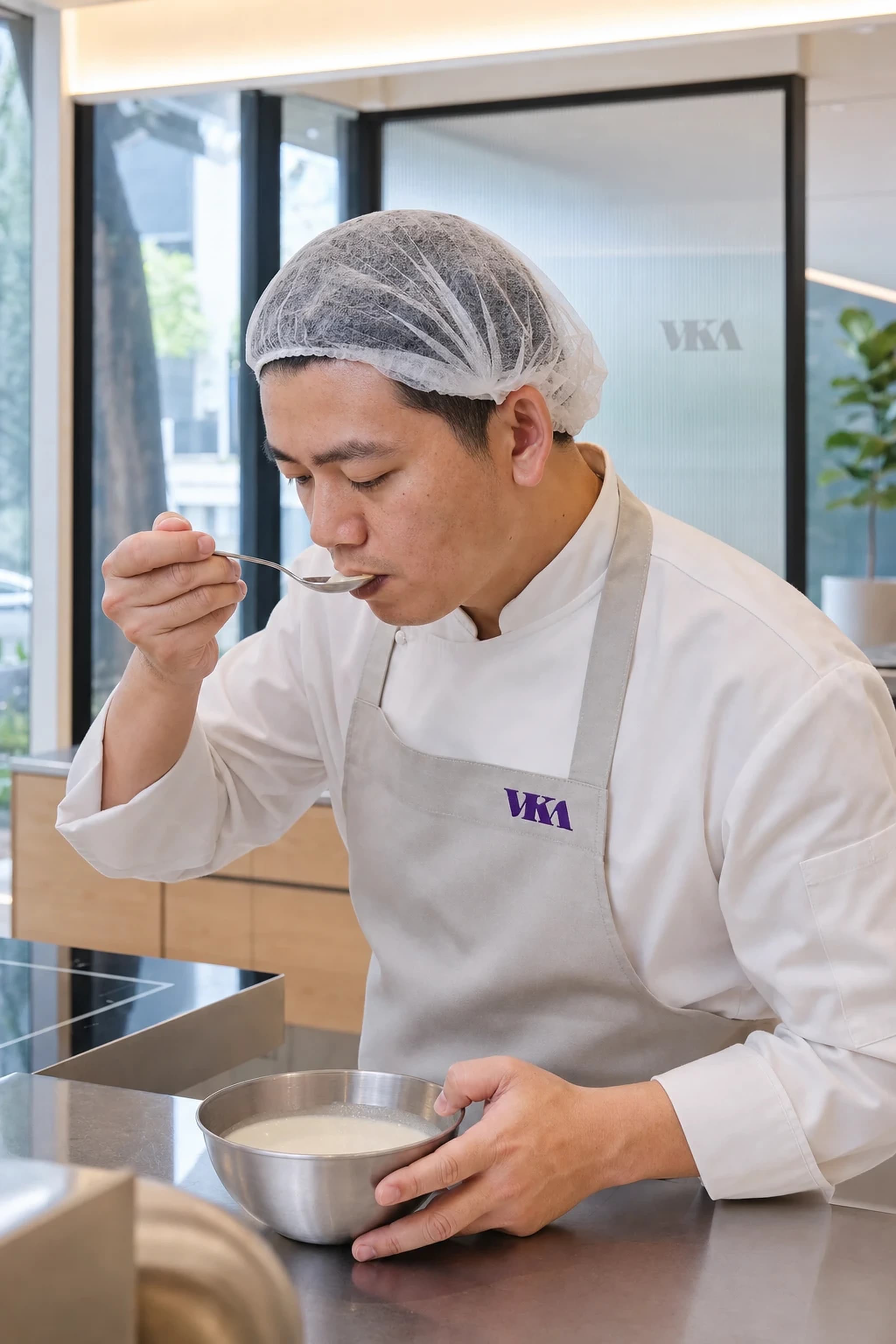
What Are Food Flavourings?
A food flavouring is a food additive. Peraturan BPOM Nomor 13 Tahun 2020 on flavouring food additives, Pasal 1 angka 4, defines one as a "bahan tambahan pangan berupa preparat konsentrat, dengan atau tanpa ajudan perisa (flavouring adjunct) yang digunakan untuk memberi flavour, dengan pengecualian rasa asin, manis dan asam", a food additive in concentrated-preparation form, with or without a flavouring adjunct, used to impart flavour, excluding salty, sweet and sour tastes. Pasal 4 sorts flavourings into three regulatory categories, "a. Perisa Alami; b. Perisa Identik Alami; dan c. Perisa Artifisial", but Pasal 14 as amended by Peraturan BPOM Nomor 11 Tahun 2021 recognises only two label groups, "a. Perisa Alami; dan b. Perisa sintetik".
The ayat (3a) inserted in 2021 is the load-bearing sentence: "Perisa sintetik sebagaimana dimaksud pada ayat (2) huruf b terdiri atas perisa identik alami dan perisa artifisial", synthetic flavouring consists of nature-identical and artificial flavourings. For your own labels as a food manufacturer, PerBPOM 31/2018 on processed food labelling, Pasal 19 ayat (3) huruf d, requires your ingredient list to show the "nama kelompok perisa untuk BTP perisa meliputi perisa alami dan/atau perisa sintetik". So a nature-identical flavouring never appears on a label under that name; it is written perisa sintetik. The primary references for this section are PerBPOM 13/2020, PerBPOM 11/2021 and PerBPOM 31/2018 at JDIH BPOM (jdih.pom.go.id). A flavouring is distinct from a whole herb or spice, which is generally treated as a food ingredient rather than a food additive.
Three Regulatory Categories, Two Label Groups
PerBPOM 13/2020 Pasal 4 groups flavourings "berdasarkan sumber dan proses pembuatan Perisa", by source and manufacturing process. The category governs what the flavouring may contain; the label group governs what is printed on the pack. They are not the same, and that gap is the most common source of labelling error.
1. Perisa Alami, natural flavouring. Under Pasal 4 it may contain only natural flavouring compounds, natural aromatic raw materials, flavouring preparations and smoke flavourings, and may contain neither nature-identical nor artificial compounds. Examples: vanilla extract from vanilla beans, citrus essential oil from fresh peel, pandan extract from pandan leaves. Its label group is "perisa alami".
2. Perisa Identik Alami, nature-identical flavouring. Pasal 1 angka 12 defines a nature-identical flavouring compound as one "yang diperoleh secara sintesis atau diisolasi melalui proses kimia dari bahan baku aromatik alami dan secara kimia identik dengan senyawa yang ada dalam produk alami", obtained by synthesis or isolated by a chemical process from natural aromatic raw material and chemically identical to a compound present in a natural product. Example: synthetic vanillin, molecularly the same as vanillin from a vanilla bean. Its label group is not "perisa identik alami" but "perisa sintetik".
3. Perisa Artifisial, artificial flavouring. Pasal 1 angka 13 describes an artificial flavouring compound as one chemically synthesised and not yet identified in a natural product. Example: ethylvanillin. Its label group is also "perisa sintetik". Use of flavouring compounds follows Pasal 6 ayat (2), "sesuai batas maksimal CPPB", at good manufacturing practice level, from the list first set in Lampiran III and since changed by decisions of the Head of BPOM.
How Food Flavourings Are Made
Making a flavouring combines food science, analytical chemistry and the flavourist's craft. PerBPOM 13/2020 Pasal 3 ayat (2) names five kinds of flavouring material: "a. Senyawa Perisa; b. Bahan Baku Aromatik Alami; c. Preparat Perisa; d. Perisa Asap; dan/atau e. Perisa Hasil Proses Panas". Four industrial methods are the most common:
- Solvent extraction. Raw materials are steeped in a food-grade solvent such as ethanol, propylene glycol, or water to draw out aroma compounds. The solvent is then concentrated or partly evaporated. This is the standard method for vanilla, coffee, and many spice extracts.
- Distillation. Raw materials are heated, and the aroma vapour is collected and condensed. Suitable for essential oils from citrus peel, pandan leaves, and spices such as clove and cinnamon.
- Fermentation. Microorganisms are used to produce aroma compounds. Biological vanillin, lactic acid, and many cheese compounds are produced through this route. It meets the natural category under the regulations of many countries.
- Compounding. A flavourist blends dozens to hundreds of aroma compounds to build a particular sensory profile. This is the heart of flavour work, and the reason every supplier has its own signature taste.
Applications in Indonesia's F&B Industry
Almost every category of processed food and beverage uses flavourings, with differing profiles and functions:
- Instant noodles. Powder seasonings and seasoning oils rely on savoury flavourings (chicken, curry, soto, rendang) that withstand the drying and rehydration process.
- UHT and flavoured milk. Chocolate, strawberry, vanilla, and melon flavourings must withstand ultra-high temperature pasteurisation without losing their profile.
- Biscuits and wafers. Flavourings must be stable at high baking temperatures. Cream coatings often use encapsulated flavourings for controlled release in the mouth.
- Powdered drinks. Flavourings must dissolve quickly, not clump, and withstand humidity during long storage in a tropical climate.
- Extruded snacks and crisps. Flavourings are applied as a powder topping or slurry, with carrier support that holds the profile through to consumption.
- Confectionery and sweets. Flavourings must withstand the tempering process and stay stable through a long shelf life.
How to Choose a Flavouring Supplier
If you are just starting to evaluate flavouring suppliers, the following five aspects are a good starting point:
- A traceable halal certificate. UU Nomor 33 Tahun 2014 Pasal 4 requires products circulating in Indonesia to be halal certified, and PP Nomor 42 Tahun 2024 Pasal 159 ayat (2) puts "Bahan baku, Bahan tambahan pangan, dan Bahan penolong untuk Produk makanan dan minuman" in the first phase. The phase-in for medium and large enterprises ended on 17 Oktober 2024; for micro and small enterprises Pasal 160 ayat (2) runs "sampai dengan tanggal 17 Oktober 2026", while BPJPH states that Wajib Halal "akan berlaku pada 18 Oktober 2026". Quote both dates together, because they mean different things.
- A BPOM registration number for the food additive, a certificate of analysis per batch, and extraction solvent residues as required by PerBPOM 13/2020 Pasal 10.
- Local technical support: an application laboratory, a sensory panel, and flavourists you can discuss formulation with.
- Documented batch-to-batch consistency (tolerance in percent for the key sensory parameters).
- Capacity and lead time that match your production plan, usually 2 to 4 weeks for standard products.
A flavouring is a Bahan, an ingredient rather than a finished product, so its halal status has to be evidenced upstream, on the flavour supplier's own halal certificate rather than on the certificate for your finished product.
For a deeper discussion of the mandatory documentation and the technical questions to ask before committing to volume, see the food flavourings buying guide.
When to Contact VKA
VKA® has developed Southeast Asian food flavours since 1971. Its manufacturing site in Singapore holds FSSC 22000 certification. VKA is MUIS and BPJPH halal-certified. Official distribution in Indonesia is through PT Aroma Indonesia Internasional. More than 5,000 flavour profiles have been developed for F&B manufacturers across ASEAN, including Asian profiles such as pandan, durian, coconut, gula melaka, rendang, and sambal. Learn about VKA's formulation capabilities or explore all of the flavour industry guides.